California's Bullet Train Is Rising in the Central Valley. San Diego Is Still Waiting Its Turn.
The state is building the Los Angeles-to-San Francisco line in pieces, starting in the middle. The San Diego segment exists on maps — and only on maps, for now.
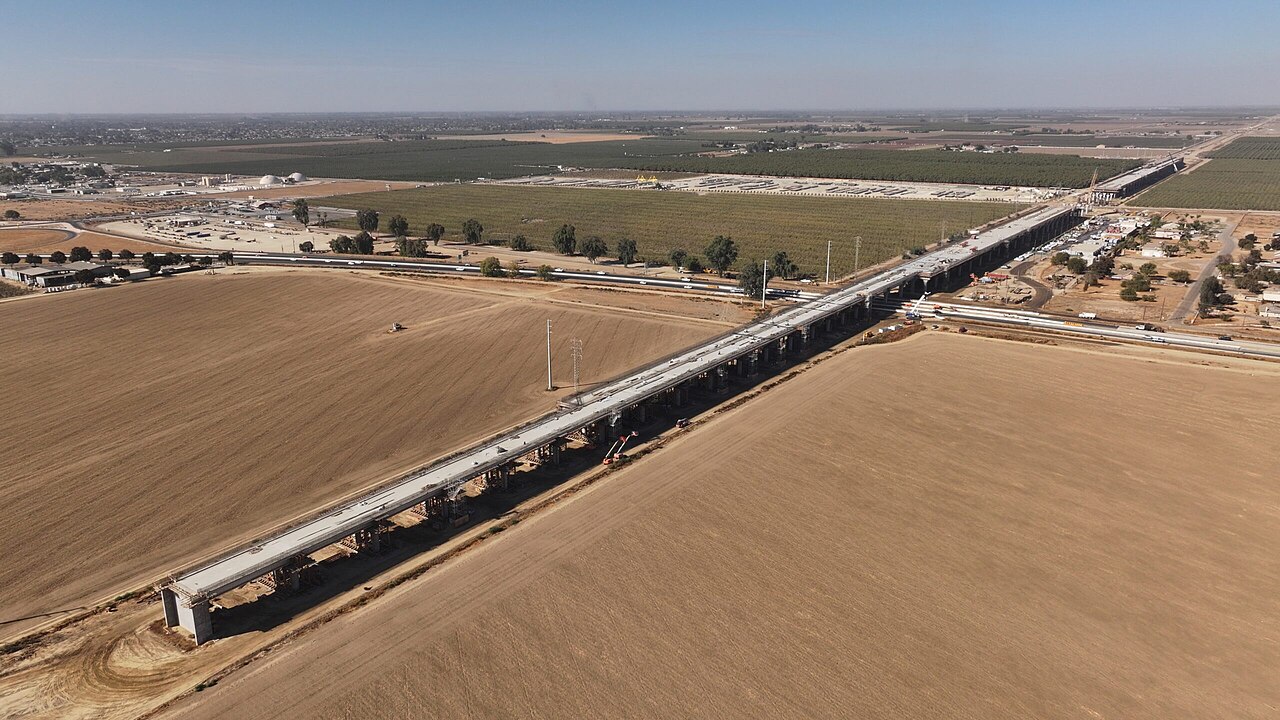
The largest public works project in California is being built, fittingly, in the middle of the state. The California High-Speed Rail Authority has spent the past several years constructing the first segment of the voter-approved bullet train through the Central Valley — viaducts, grade separations, and guideway between Madera and the outskirts of Bakersfield, with the initial operating segment planned to run between Merced and Bakersfield.
San Diegans looking for their station will not find construction here. The system's Phase 1 runs from San Francisco to Los Angeles and Anaheim; the extension to San Diego, sketched to arrive via the Inland Empire, belongs to Phase 2 — planned, environmentally studied in part, and unfunded for construction. The honest summary is that high-speed rail is a real and growing physical fact in California that has not yet reached Southern California's tracks.
The near-term rail story in San Diego County runs on conventional steel. The LOSSAN corridor — the coastal line carrying Amtrak's Pacific Surfliner and the Coaster commuter trains — is both the region's rail spine and one of its climate headaches, with bluff erosion in Del Mar forcing long-running debates about moving the tracks off the crumbling coastline.
That debate is, in effect, San Diego's high-speed rail debate by proxy: any future bullet train would need the same corridor questions answered — where the line runs, what it costs, and whose coastline it crosses.
State officials continue to frame the Valley segment as the spine to which everything else attaches, and every year of construction there makes the system more real and its remaining price tag larger. For now, the San Diego chapter of the project is a lesson in California sequence: the middle first, the ends when the money follows.