
The Merge: A Field Guide to San Diego's I-5/I-805 Squeeze
Two interstates become one through the heart of the region's job center. Why the Sorrento Valley merge backs up, and the rail line threading the same canyon.
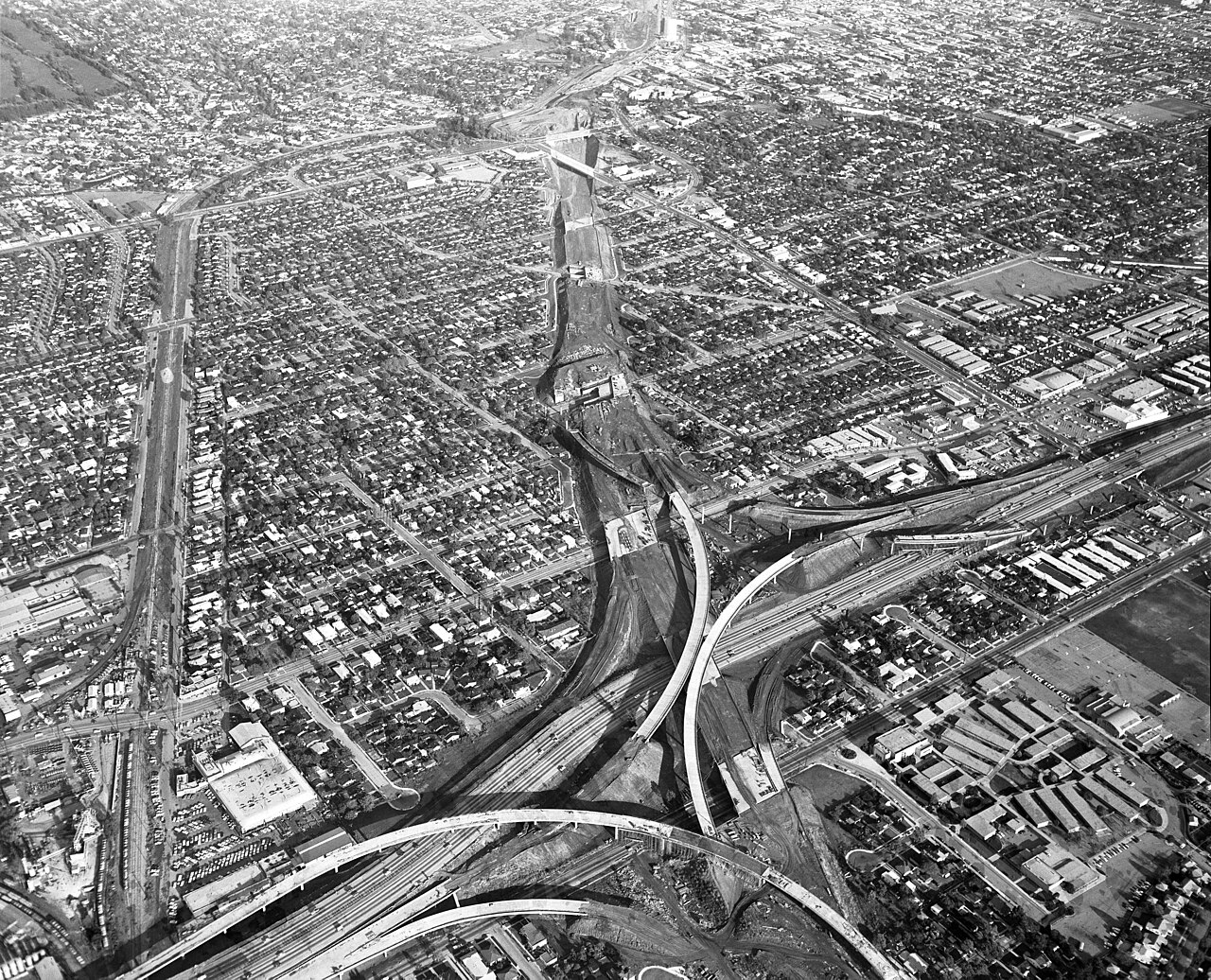
Every weekday, San Diego performs a funnel experiment. Interstates 5 and 805 — the region's two great north-south freeways — converge in Sorrento Valley, merge into a single roadway for the climb past Carmel Valley, and split again at Del Mar Heights. The result, the Merge, is the closest thing San Diego traffic has to a household name.
The geometry explains the grief. Sorrento Valley and the surrounding mesas hold one of the densest concentrations of jobs in the county — biotech, wireless, and research campuses strung along the canyon rims — while much of the housing for those workers sits to the south and east. Both interstates deliver commuters into the same few miles at the same hours, and the merged roadway carries the combination.
Transit threads the same corridor on steel. The Coaster commuter train runs through Sorrento Valley on the coastal rail line, and the Mid-Coast Trolley extension — the Blue Line's climb from Old Town up to University City and UC San Diego, which opened in November 2021 — gave the area its first light-rail service, with the Nobel Drive and VA Medical Center stations serving the mesa's edge.
Transportation planners at SANDAG, the regional agency, have studied the corridor for decades; managed lanes, interchange rebuilds, and transit expansions all appear in the long-range plans. The corridor's constraints are physical — canyons, mesas, and the Los Peñasquitos Lagoon just north — which is why every fix arrives in pieces.
For drivers, the standing advice is boring and true: the merge punishes the peak of the peak, roughly 7:30 to 9 in the morning southbound-side flows and the long evening climb north. Shifting even half an hour, or trading the canyon for the trolley's grade-separated climb, is the cheapest capacity the corridor has.