
Santa Ana Season: Why San Diego's Hottest, Driest Winds Arrive With the Fall
The offshore winds that spike temperatures and fire danger in November follow a simple recipe — high pressure over the Great Basin, and gravity doing the rest.
San Diego's strangest weather does not roll in off the ocean. It pours downhill from the desert. Santa Ana winds — the hot, dry offshore flow that can push coastal temperatures into the 80s in November and drop humidity into the single digits — are a signature of the fall and winter months in Southern California, and November sits squarely in their season.
The mechanics are simple enough to sketch. High pressure builds over the Great Basin, the high desert plateau of Nevada and Utah. Air from that system flows toward the lower pressure at the coast, squeezing through the mountain passes and canyons of the Peninsular Ranges. As it descends toward San Diego it compresses and warms — roughly five and a half degrees for every thousand feet it falls — arriving at the coast hotter and drier than it started.
That combination is why Santa Ana episodes and fire weather are synonyms in this region. The National Weather Service issues Red Flag Warnings when strong Santa Anas coincide with critically low humidity, and utilities in the backcountry may shut off power preemptively on the worst days to reduce ignition risk from power lines. The region's worst firestorms, including the Cedar and Witch Creek fires of 2003 and 2007, rode Santa Ana winds.
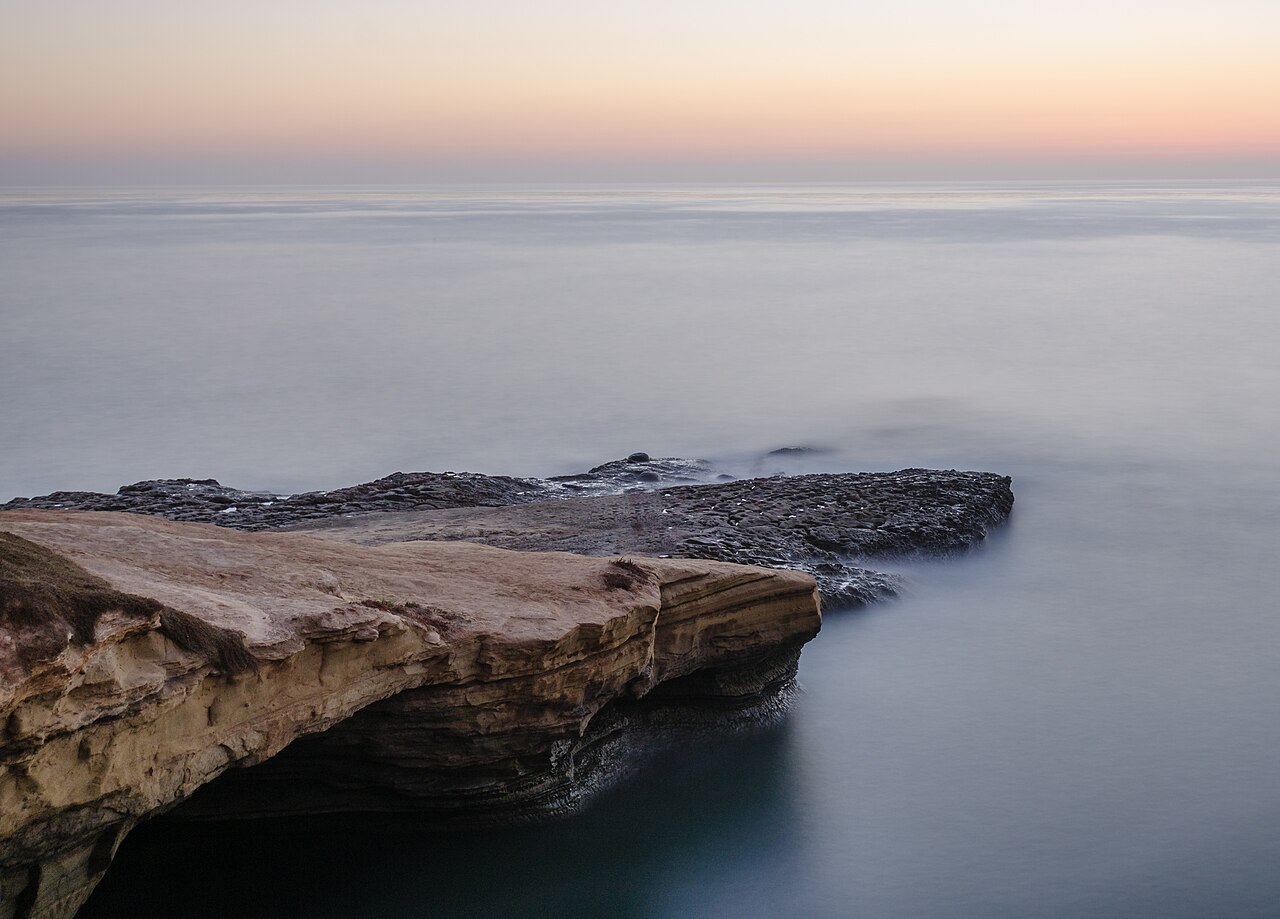
The same pattern has a gentler face. Santa Ana days are famously clear — the offshore flow sweeps marine haze out to sea, the mountains stand out in hard detail, and sunsets over the Pacific take on the deep, dust-free colors photographers wait for all year.
November is also the month the pattern can break the other way. The season's first Pacific storms begin shouldering in, king tides return to the winter calendar, and a county that spent weeks watching humidity can find itself, within days, watching flood gauges. San Diego's fall is never one thing for long — it is the argument between desert air and ocean air, and November is when the argument is loudest.